European Fraternity
The Fraternity
A Christian European network, based on friendship and trust, which promotes a fraternal Europe respectful of the differences and particularities of each country, culture and tradition.
Our calling
Vision and mission
Our vision
A Europe-wide community of service-oriented members, called to act as creative minorities, engaging every sphere of society to shape Europe towards the hope of Christ.
Our mission
To foster a community of Christ-centred members, fraternally united and locally engaged, dedicated to the spiritual and cultural renewal of Europe.
The membership
Members
Members come from across Europe and from across the Christian traditions. They are professionals, entrepreneurs, academics, artists, parents and public servants.
In a time of moral, spiritual and social confusion, the Fraternity builds intentional Christian community and commits itself to the promotion and safeguarding of the spiritual, cultural and political heritage of Europe. Its principles and its vision of the human person are anchored in Christian social thought.
The structure
Three levels
A community of members
An international community of Christian leaders, professionals and doers from many countries and traditions, who share the desire to renew Europe.
Fraternal life
Friendship and trusted connection across Europe: local chapters and smaller circles formed around places, professions, questions and stages of life.
Strategic platforms
Spaces where members and their peers meet: gatherings, formation, study journeys and mission outreach, and support for member-led initiatives in every sphere of society.
A borrowed word
A creative minority, and its opposite
Toynbee compared more than twenty civilisations. None was carried by its majority. Each rose when a small group met a hard challenge with a better answer, and others followed freely. He called such a group a creative minority.
Seven turning points
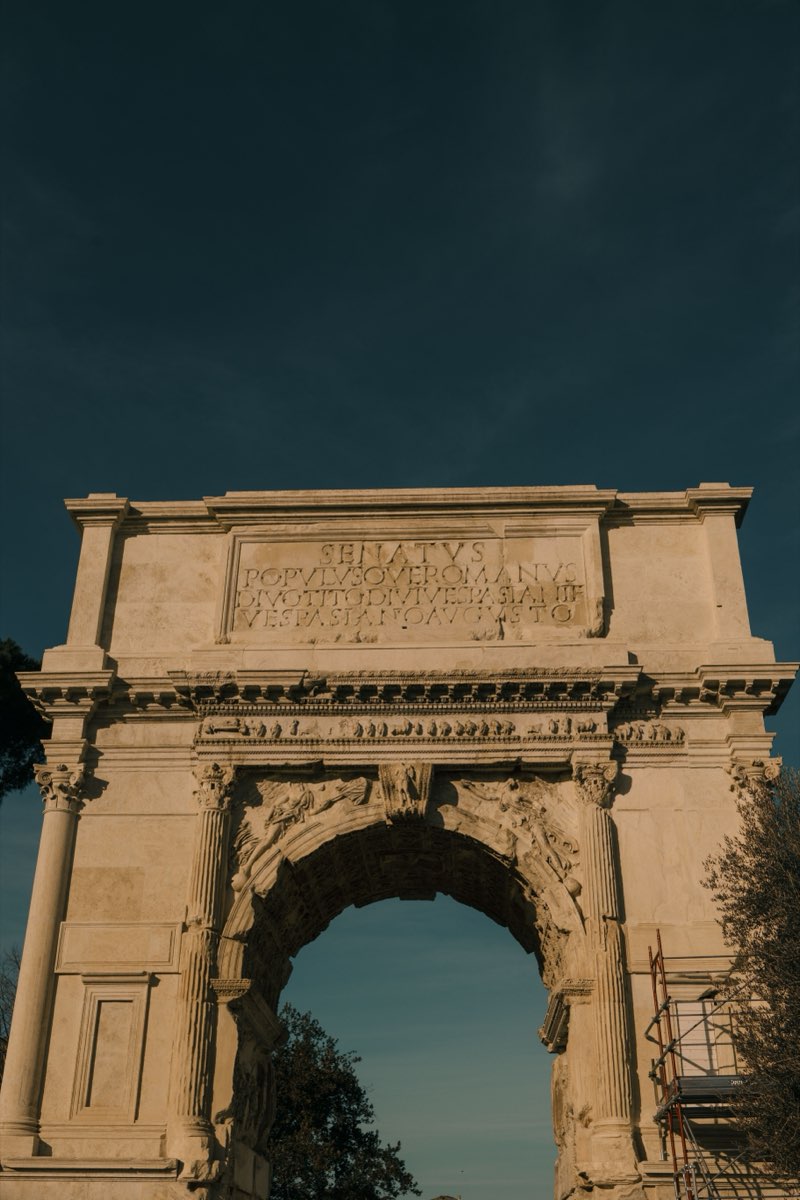 Arch of Titus, Rome
“Civilizations die from suicide, not by murder.”
Arnold J. Toynbee
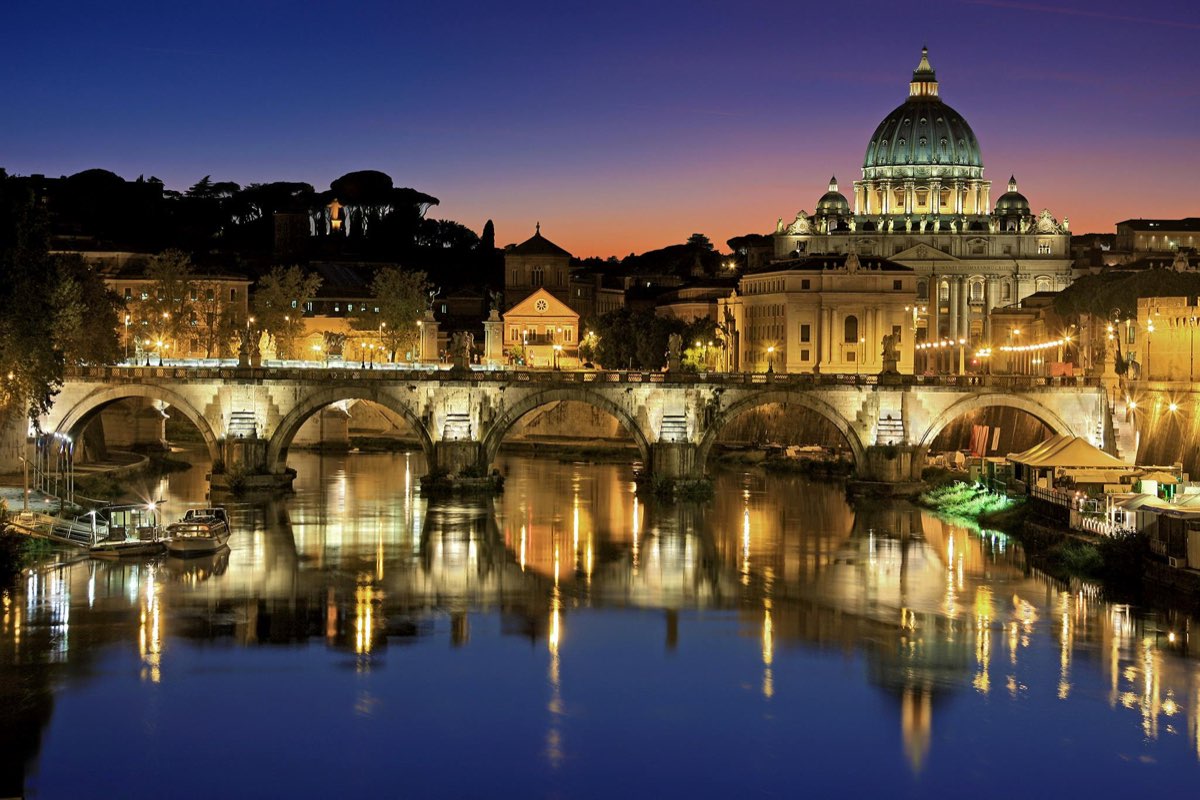 Rome
40%
growth per decade, for 250 years. By A.D. 350 Christians were more than half the Roman Empire.
Rodney Stark, The Rise of Christianity“It is the creative minorities that determine the future.”
Benedict XVI, 2009
Pope Benedict XVI took the term from Toynbee and changed its grammar. What had been a description of how history works became a vocation: Christians in Europe should neither dream of restored majorities nor retreat into a sect, but be a creative minority: small, convinced, joyful, intellectually serious, and generating culture rather than policing it. Minority status is no longer something we choose. The kind of minority we are still is.
Toynbee’s most uncomfortable observation is the one we apply to ourselves. A dominant minority is not a different species from a creative one: it is a creative minority that stopped creating and kept the throne.
| Creative minorityleads | Dominant minorityrules | |
|---|---|---|
| Followed | Freely, by imitation. It attracts. | Reluctantly, out of fear. It coerces. |
| Authority | Earned by solving society’s real challenges. | Held by privilege and apparatus. |
| Culture | Generates it: ways of life, institutions, art. | Polices it: censors, manages, freezes. |
| Towards the whole | Serves it, and renews itself. | Extracts from it, and defends itself. |
| Its effect | Leaven in the dough. | Dynamite under the house. |
The moment influence becomes the goal rather than the by-product, a creative minority has started to become a dominant one.
In practice
Four pillars
Spiritual and fraternal support
Prayer is the ground the Fraternity stands on. Members carry one another's intentions, and every gathering makes room for spiritual nourishment: texts, silence, meditation. Discernment becomes possible, and strength is restored.
European cultural awareness
To love is to know. Europe's diversity asks something of us personally, culturally and spiritually: to recognise what unites us and to treasure what distinguishes us. Whoever does not know where they come from will not know where they are going.
Forming and equipping
Shaping the future takes formed character and real tools. The Fraternity offers intellectual nourishment (seminars, meetings, conversation with people who think well) and a network in which members hold each other to a standard.
A network of collaboration
Faith is expressed in charity. Members find through the Fraternity the people they need in order to act.
The standard we keep
Excellence and virtue
Western civilisation was built by people striving to advance in virtue and to fill their families, their work and the public square with what is true, good and beautiful. That is the tradition the Fraternity belongs to, and it sets a plain expectation of every member: do your own work well.
Members are held to a standard of personal and professional excellence, and to magnanimity in their striving for a worthy and prosperous society. Neither counts for much without the other. We ask for both of ourselves before asking them of anyone else, in the ordinary places where our lives are actually lived.
Work done well is itself a kind of charity, and it persuades where arguments do not.
Where we stand
Seven convictions
Christ at the centre
The dignity of every person
Marriage and the family
Freedom of conscience
Friendship as the foundation
A united and fraternal Europe
The soul of Europe
Ask us anything
Questions about the Fraternity, its work, or a possible introduction are always welcome.